problems
Residue on Glass Surfaces
Glass makes surfactant streaks obvious; separating film from etching and from hard water is the first diagnostic step.
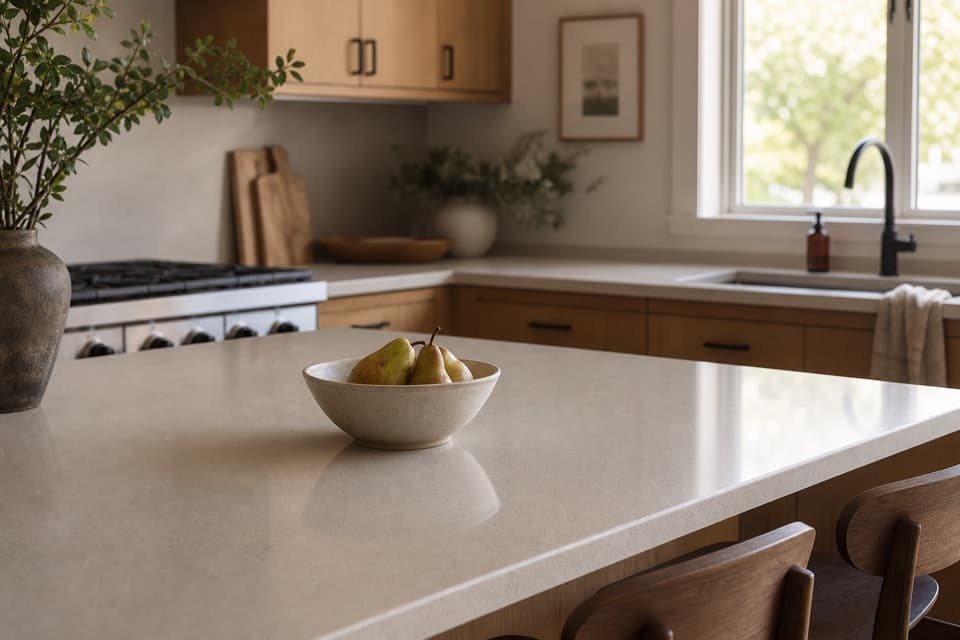
Problems example
Example condition context for cleaning-method selection.
What This Is
Residue on glass surfaces appears as fan-shaped wipe marks, repeating arcs, or a uniform fog that worsens when the sun hits at a low angle.
Why It Happens
Evaporation fronts concentrate dissolved solids and surfactants at the edges of each wipe stroke, especially on warm glass or single-pane sun-facing windows.
What People Do Wrong
People use too much product, clean hot glass, or buff with towels that shed lint that sticks into the film.
Professional Method
Use minimal cleaner, change towel quadrants often, finish with a dry edge or squeegee on large panes, and verify with a cross-light check from two angles.
Data and Benchmarks
If a razor test on a small edge zone does not change appearance, suspect etching or bonded mineral—not simple film.
Professional Insights
Indoor particulate from candles or frying can nucleate streaks; the pattern is often worse near kitchen openings.
When to Call a Professional
Call a professional when high glass, coated low-E failures, or historic glazing limits access and tool choice, or when etching diagnosis needs controlled polishing scope.
Related Topics
- [Residue on Stainless Steel](/encyclopedia/problems/residue-on-stainless-steel)
- [Cleaner Film on Countertops](/encyclopedia/problems/cleaner-film-on-countertops)
- [Floor Residue After Mopping](/encyclopedia/problems/floor-residue-after-mopping)
- [Product Residue Buildup](/encyclopedia/problems/product-residue-buildup)
- [Sticky Floors After Cleaning](/encyclopedia/problems/sticky-floors-after-cleaning)
- [Dust on Glass Surfaces](/encyclopedia/problems/dust-on-glass-surfaces)
- [Cloudy Glass vs Etched Glass](/encyclopedia/problems/cloudy-glass-vs-etched-glass)
- [Etching vs Residue on Glass](/encyclopedia/problems/etching-vs-residue-on-glass)