Loading...
Method + problem playbook
Detail dusting for Dust buildup
Authority graph: primary / preferred method + problem playbook.
Overview
primary fit for dust buildup using detail dusting.
Why this pairing
Dust follows airflow and static. HVAC gaps, filter bypass, open windows, shedding textiles, pet traffic, dry indoor air, and vacuuming after dusting all reload surfaces. Residue also matters: tacky polish or cleaner film turns normal dust into recurring buildup. Recurrence timeline: dust returning in hours points to active airflow, construction fines, HVAC bypass, or tacky residue; dust returning in 1-3 days often points to textiles, pets, open windows, or vacuum order; weekly edge bands usually indicate normal load plus incomplete capture. Environmental recurrence comes from return vents, leaky filter frames, dry static-prone air, shedding rugs, litter boxes, pet bedding, door mats, and cleaning order that sends particles airborne after surfaces were finished.
Risks
Detail dusting and Dust buildup is a preferred graph pairing—follow label limits and inspect between passes.
Process
- Confirm severity and compatible surfaces before wet work.
- Apply the method with ventilation and label dwell.
- Rinse or wipe clear; stop if appearance shifts.
Best approach by severity
- Light: Use a mild cleaner and wipe method
- Moderate: Use targeted chemistry with dwell time
- Heavy: Use restoration-level cleaning and repeat cycles
Products that fit this method
Ranked for dust buildup on baseboards.
These products are selected based on what actually works for the problem, surface, and cleaning goal.
Start with Start here, then use the other picks for heavier buildup, maintenance, or a stronger option.
Start hereTop pick
Best balance of cleaning power, surface safety, and everyday usability.
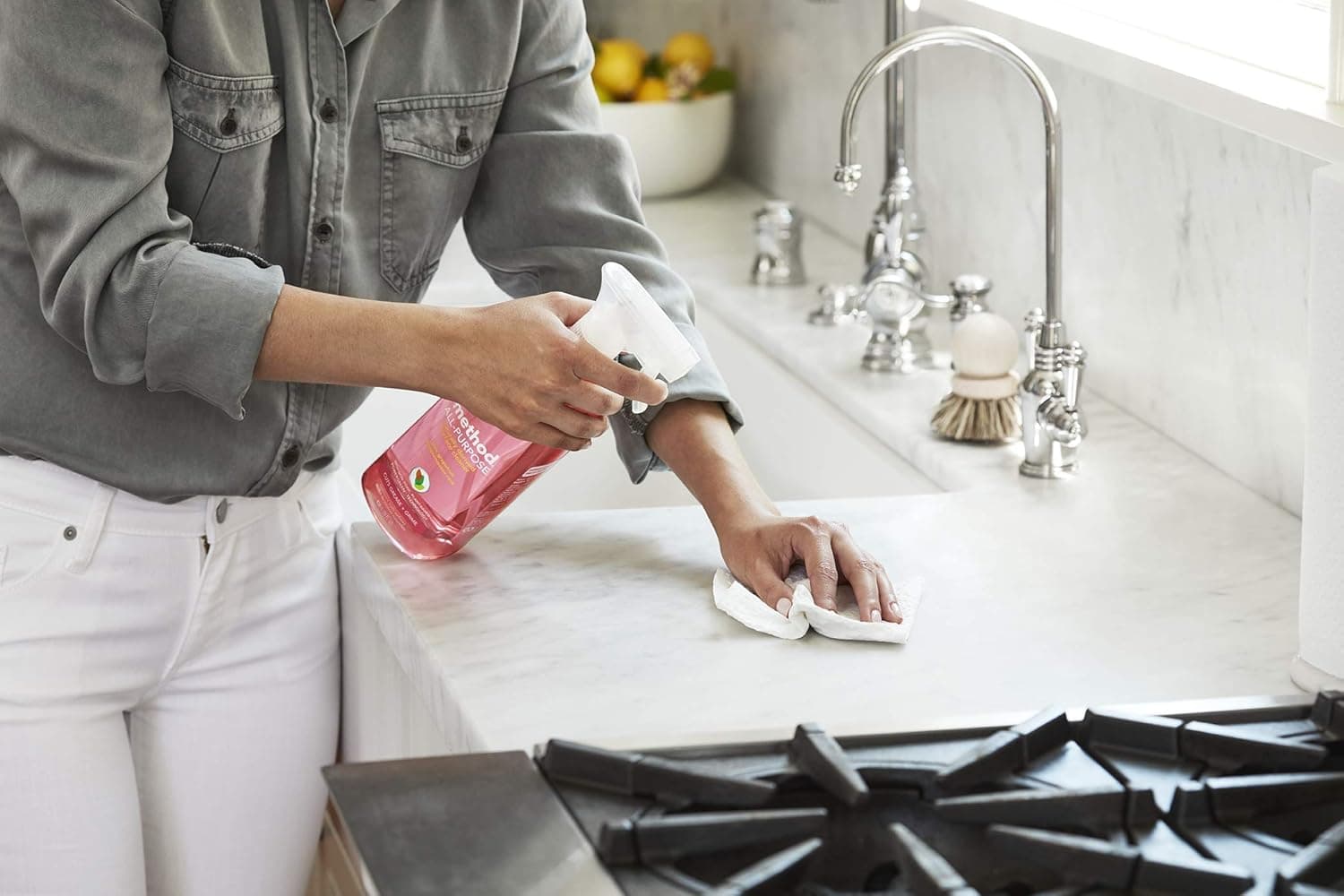
Method All-Purpose Cleaner (Pink Grapefruit)
Method
Compatibility reference: 8.0Fit: Situational
Professional-use context: Kitchen oils, fingerprints, and organic films on hard surfaces.
Score: 8
Fit: Situational
Use with extra label care here—tradeoffs or limits matter more for this pairing.
• Tagged for “dust buildup” in the product library
For heavier buildup
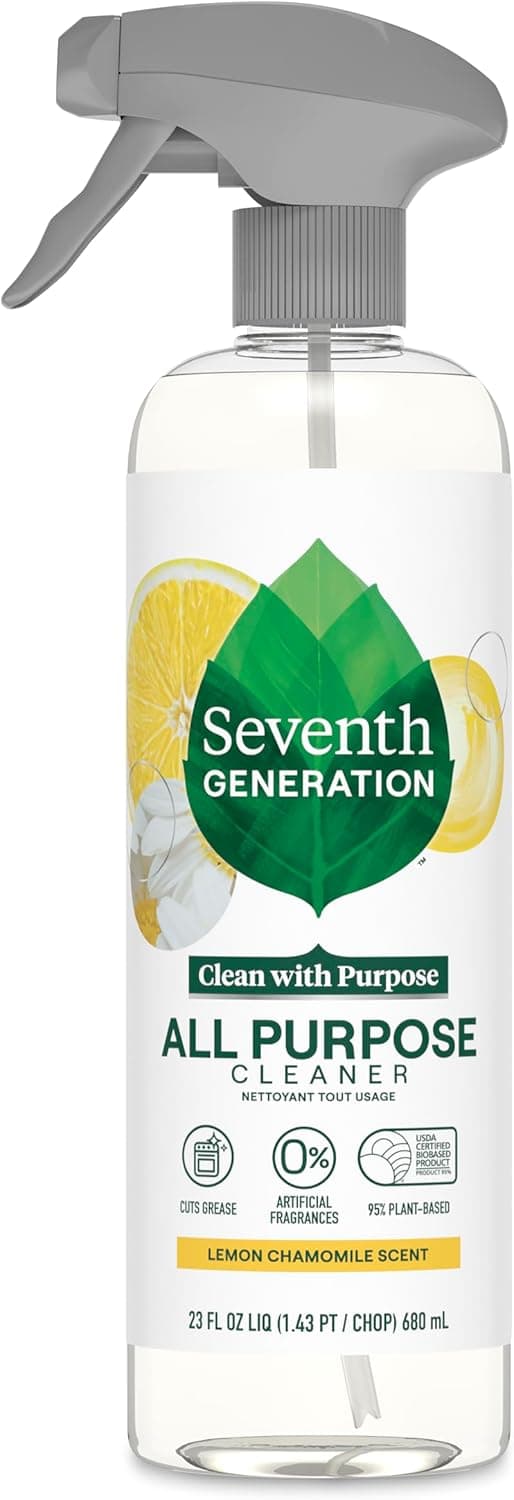
Seventh Generation All Purpose Cleaner (Lemon Chamomile)
Seventh Generation
Compatibility reference: 8.0Fit: Situational
Professional-use context: Kitchen oils, fingerprints, and organic films on hard surfaces.
Score: 8
Fit: Situational
Use with extra label care here—tradeoffs or limits matter more for this pairing.
• Tagged for “dust buildup” in the product library
Ranks #2 here—Method All-Purpose Cleaner (Pink Grapefruit) leads for this problem on this surface.
For maintenance

Method Wood for Good Daily Clean
Method
Compatibility reference: 7.7Fit: Situational
Professional-use context: Routine cleaning aligned to the labeled surfaces and problems.
Score: 8
Fit: Situational
Use with extra label care here—tradeoffs or limits matter more for this pairing.
• Tagged for “dust buildup” in the product library
Ranks #3 here—Method All-Purpose Cleaner (Pink Grapefruit) leads for this problem on this surface.
Compare with Pledge Everyday Clean Multisurface →Pledge Everyday Clean Multisurface
Pledge
Compatibility reference: 7.7Fit: Situational
Professional-use context: Routine cleaning aligned to the labeled surfaces and problems.
Score: 8
Fit: Situational
Use with extra label care here—tradeoffs or limits matter more for this pairing.
• Tagged for “dust buildup” in the product library
Ranks #4 here—Method All-Purpose Cleaner (Pink Grapefruit) leads for this problem on this surface.
Compare with Method Wood for Good Daily Clean →Some product links may be affiliate links. This does not affect how products are evaluated or recommended.
Common mistakes
Using vinegar or low-pH DIY mixes on marble, granite, or other acid-sensitive stone without a label-backed plan.
Reaching for dish soap or neutral cleaners when the soil is mineral scale—surfactants often move the problem, not remove it.
Spraying disinfectant on dirty surfaces: organic film can shield microbes; clean first unless the label says otherwise.
Playbook FAQ
Why use detail dusting for dust buildup?
Detail dusting is connected to dust buildup in the graph because it can address that problem type in the right context. Surface compatibility still determines whether it is actually appropriate.
What makes this playbook fail?
This playbook usually fails when the visible problem is misidentified, the surface cannot tolerate the method safely, or the finish step leaves behind residue or unevenness.
Does this playbook apply to every surface?
No. A method-problem relationship does not automatically mean every surface is a safe fit. The surface layer still controls the risk profile.
See also
Related methods
Neutral surface cleaning
Neutral surface cleaning: defined technique, compatible surfaces, and clear stop points.
Related surfaces
Baseboards
Baseboard guidance for dust ledges, mop splash, scuffs, pet residue, paint preservation, and trim-detail maintenance.
Finished wood
Finished wood guidance for low-moisture cleaning, dust, fingerprints, product buildup, dullness, and finish preservation.
Hardwood
Hardwood guidance for sealed floors, moisture control, grit abrasion, finish dullness, pet marks, and recurring maintenance.
Painted surfaces
Painted surface guidance for doors, trim, rails, cabinetry, wall paint, fingerprints, scuffs, degreasing limits, and finish dulling.
Painted walls
Painted wall guidance for fingerprints, scuffs, dust, washable paint limits, moisture control, and finish dulling.
Sealed surfaces
Sealed surface guidance for protective coatings, sealer wear, maintenance cycles, residue control, and when cleaning becomes restoration.
Related problems
Floor residue buildup
Floor residue buildup: what it usually is, safe method fit, and when to stop.
General soil
General soil: what it usually is, safe method fit, and when to stop.
Grime buildup
Grime buildup: what it usually is, safe method fit, and when to stop.
Product residue buildup
Product residue buildup: what it usually is, safe method fit, and when to stop.
Scuff marks
Scuff marks: what it usually is, safe method fit, and when to stop.
Smudge marks
Smudge marks: what it usually is, safe method fit, and when to stop.